



February 2026
February 2, 2026
Award for Safety Excellence
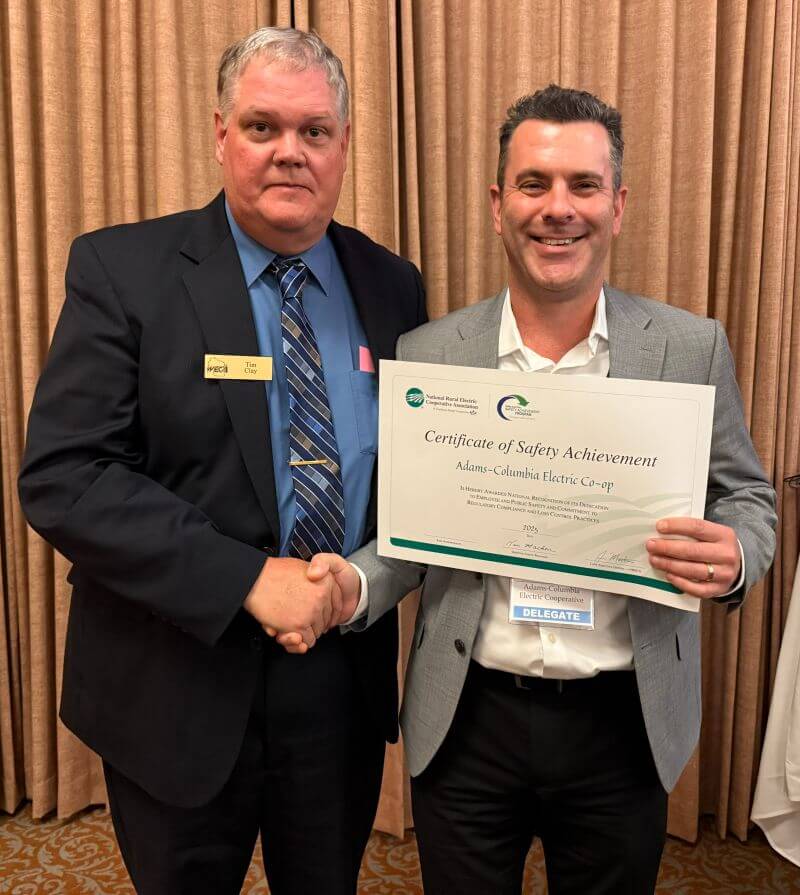 Our General Manager, Jon Congdon, was presented with a Certificate of Safety Achievement from Tim Clay of Wisconsin Electric Cooperative Association (WECA) for our safety efforts at the WECA Annual Meeting in late 2025.
Last May, a team of safety professionals from across the state inspected our buildings, grounds, substations, and line equipment to ensure our employees have a safe work environment and that everyone is following safety protocols. The Rural Electric Safety Achievement Program (RESAP) includes leadership commitment, annual performance measures, safety health checks, onsite inspections, and a safety improvement plan to ensure safety is at the forefront of what we do.
Safety is a top priority at our cooperative, and we thank our employees for their dedication to our safety culture.
We can help grow your business
FEMA Reform
Electric co-ops rely on the Federal Emergency Management Agency (FEMA). Smaller, localized weather events may not always make national headlines but can still cause significant damage. FEMA funding is essential for rebuilding electric infrastructure damaged by natural disasters.
We support the bipartisan FEMA Act of 2025, which aims to modernize disaster assistance delivery, making recovery times faster, more transparent, and more equitable.
As this important piece of legislation makes its way through Congress, we urge policymakers to preserve and strengthen FEMA’s disaster recovery programs, ensuring they remain responsive to rural needs.
The Path of Power
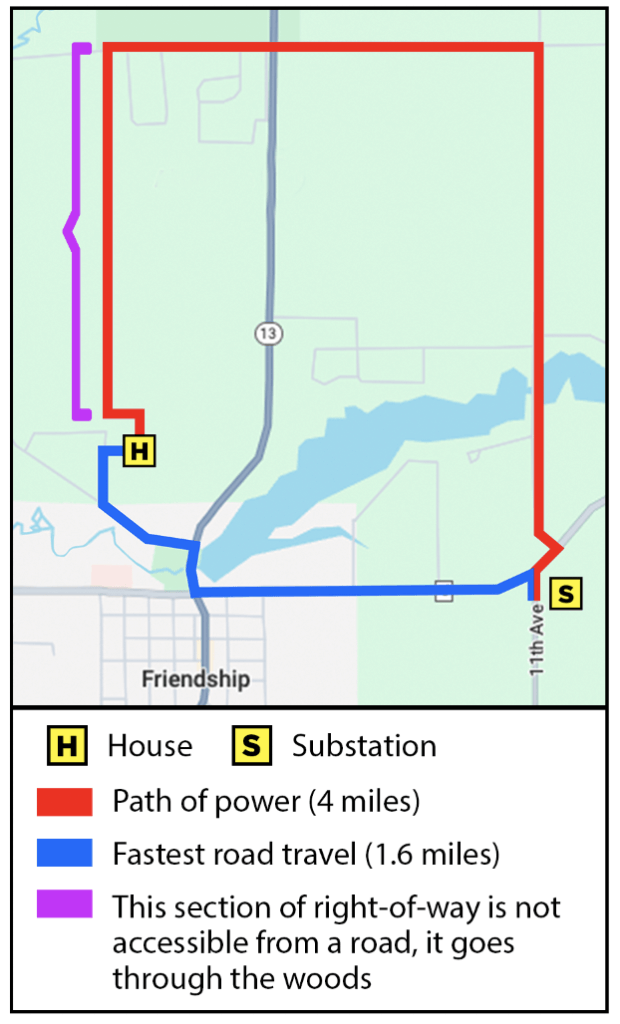
The path of power from a substation to your home isn’t always the shortest route possible. When delivering power, we use our existing facilities to keep costs as low as possible for our members. The examples below show how power is distributed on our system and how it impacts outage situations.
 Not always the shortest route
In this example, the fastest commute from the house to our substation is to take the main highways. However, the power that feeds the house travels down back roads to utilize existing facilities.
Not always the most convenient route
Did you know we have right-of-ways that aren’t located on roadways? In this example, there could be a tree on a power line, and because it isn’t located off a roadway, it may not be obvious or visible to know that’s where our problem is. When members experience power outages and our crews need to investigate, this is what we call “running out the line”, by tracing the path of power back to the substation that feeds your service. Just because you may not see crews working in your area, doesn’t mean they aren’t already on the job.
The problem may not be near you
If a contractor is digging near our substation and hits one of our underground wires, everyone fed on that line would be without power. In this situation, the problem could be 10 miles away from your home. It’s a good reminder that even though our electric facilities may appear in good working order closest to your home, there is a problem upstream from you that is causing an outage.
Your neighbor may be fed from a different substation than you
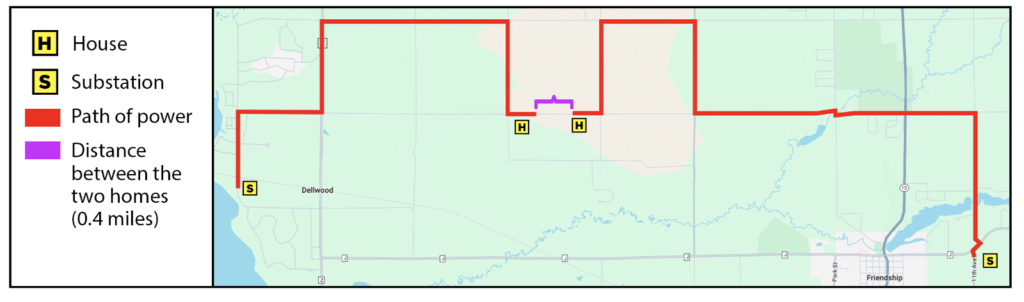
During storm situations, we often hear, “Why does my neighbor have power but I don’t?” In some cases, houses on the same road may get their power from different substations. Shown in the example below, the houses are on the same road and less than half a mile apart, but their power comes from different substations.
STEM Grant

Do you know a classroom in need of funding for a science, technology, engineering, math, or literacy-related project? Encourage local educators and organizations to apply for our STEM Grant! We’ve recently added literacy as an eligible curriculum in this program, in addition to allowing applicants to submit more than one application per year.
By embracing cooperative principle #5 (Education, Training, and Information), we’re able to extend our resources to support science, technology, engineering, math, and literacy projects and initiatives.
- Receive up to $1,000 per grant
- Accepting applications year-round
- Quarterly deadlines (February 1, May 1, August 1, November 1)
- Learn more and apply at www.acecwi.com/stem-grant
Line Patrol
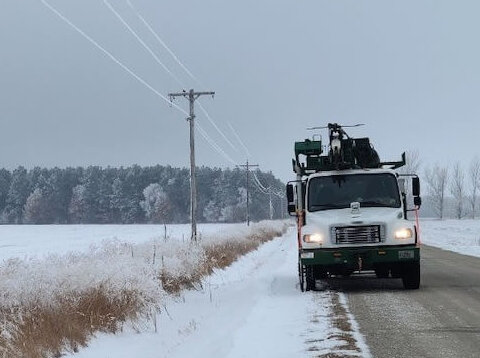
At ACEC, we’re committed to maintaining a safe, reliable, and efficient electrical system for our members. As part of our routine operations, our crews will be performing line patrol in Adams, Columbia, Dodge, Marquette, and Waushara counties. During these patrols, we carefully inspect power lines, poles, and equipment to identify and address any potential issues. These proactive measures help us maintain a reliable power supply and prevent future outages.
Photo Contest
 For our 2027 calendar, we’re seeking photos of birds through all seasons of the year and of all shapes and sizes. The deadline to submit photos is July 31, 2026. Photos can be in color or black and white, and should be horizontally-oriented.
Now’s your chance to be featured in our next calendar! Visit www.acecwi.com/submit-your-photos to share your bird photos with us.
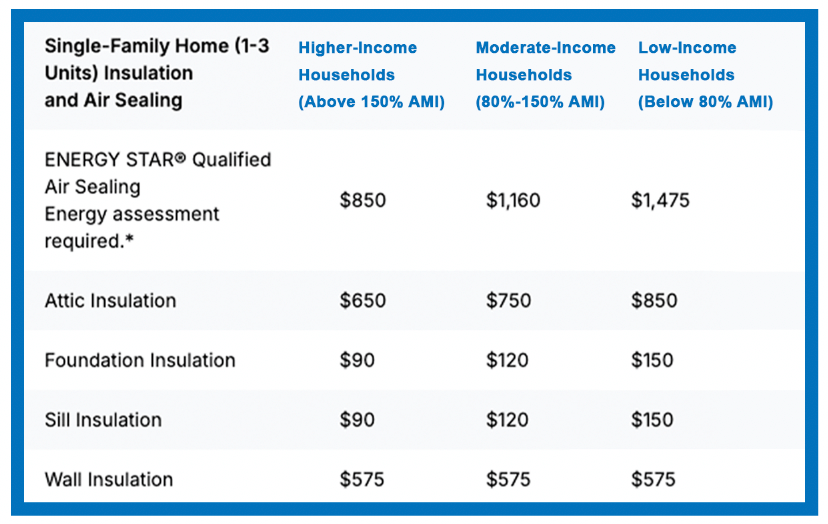
Increased Rebates in 2026!
The rebates shown are a preview of the insulation and air sealing rebates available from Focus on Energy. Explore rebates at focusonenergy.com/residential/insulation-and-air-sealing.
Safety Message
- Be sure you understand the manufacturer’s operating instructions before hooking up the generator.
- Never operate a generator in your home, garage, or other enclosed building, as they emit carbon monoxide.
- Turn off or disconnect all appliances and lights before you begin operating the portable generator.
- Never plug a portable electric generator into a wall outlet or connect directly to a home’s wiring. This can energize utility power lines and injure you or others working nearby.
Recipe
 Artichoke Dip
Recipe from Debra Ratel of Hubertus, WI
Prep Time – 15 Mins
Cook Time – 25 Mins
INGREDIENTS
- 1 can artichoke hearts, drained
- 1 1/2 c parmesan cheese, grated
- 1 c mozzarella cheese, grated
-
1 c mayonnaise
-
1 clove garlic, minced
-
Dash of red pepper
INSTRUCTIONS
- Cut up artichoke hearts very small. If you prefer a smooth dip, rather than chunky, you can process them in a food processor or blender.
- Mix all ingredients thoroughly. Bake in a casserole dish at 375 degrees for 20-30 minutes.
- Serve the dip with crackers, tortilla chips, or bread croutons.