General Manager & Board Chair Report
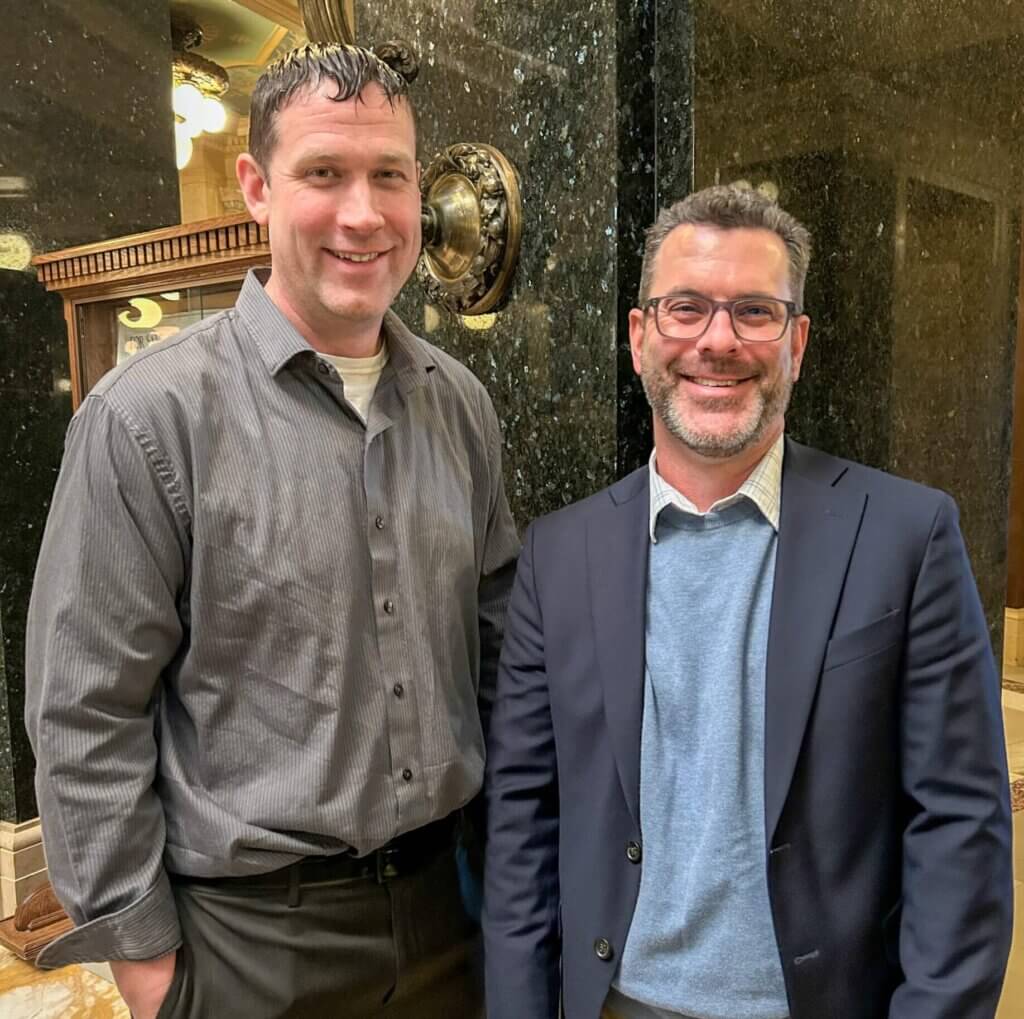
Pictured l-r: Board Chair Aaron Hoernke & General Manger Jon Congdon
Reliability
Electricity isn’t a luxury like it was 80 years ago; it’s a critical part of our daily lives. Whenever you want to charge your phone, watch the big game, or host a family holiday event, we’re there for you. At times, power outages may occur that are out of our control, but we do our best to restore those outages as quickly and safely as possible. In 2025, our members had power approximately 99.9988% of the time.
To continue our commitment to reliable service to you, we’re building additional infrastructure and continuing to perform maintenance on our distribution system. This includes line patrol, pole changes, and other necessary upgrades. Last year, we added the new Dixie substation to our system, which is located about five miles southeast of Adams. We’ll begin work on our new Colburn substation this year to serve our members for years to come.
Clean Energy
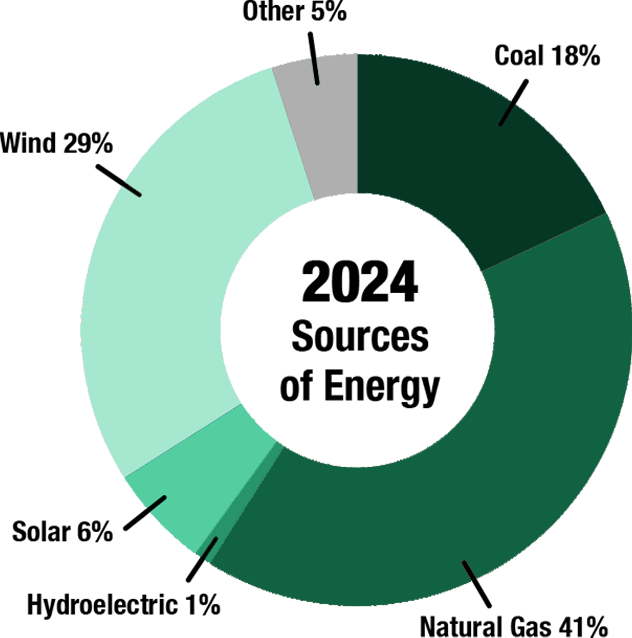
As a distribution system, we don’t generate our own electricity; we purchase our power from Alliant Energy. Through Bright Ideas, our member engagement survey on our website, we’ve heard from members how important it is to them to have clean, renewable energy. Similar to the fact that we don’t generate our own electricity, we reap the benefits of clean energy from Alliant Energy.
Their most recent Climate Report indicates that 36% of their energy sources come from renewable energy. Ultimately, Alliant’s energy mix is our energy mix since we purchase power from them.
Legislative Engagement
As topics and bills related to electric cooperatives are introduced at the state and national levels, we dive into how they will impact our members and the cooperative. Our focus is to keep our members front of mind, ensure grid reliability, cooperative governance, and consumer protection.
Rates
Through our Bright Ideas survey, rates topped the chart for the topic that members want to hear more about. Reviewing rates is a slow process, and we conduct a cost of service study every three to five years to ensure rates align with the cost of power and maintenance to our system. Our rates are based on the different electrical needs of our members. A residential home requires different equipment than a large campground, farm, or business. Not only do we factor in the equipment needed to serve different types of services, but we also look into how much energy they use.
Saving money and energy is a big priority for our members. To help guide members, we advertise energy-saving tips, promote rebates available through Focus on Energy, and encourage members to explore our Time-of-Day rate. To learn more about our rates,
click here.
$4 Million Special Patronage capital retirement
As a cooperative, any additional margins we have each year are refunded to our members through patronage capital.
We’re happy to announce that your board of directors has approved a special $4 million patronage capital retirement (refund) to members who had service with us in 2025. The board of directors reviewed year-end financials, which indicated that our excess margins were due to:
- Day-to-day efficiencies at the co-op
- We came under budget in other areas across the co-op
- We’re secure in our operating margins
- Lower than budgeted power supply costs
- Strong cash flow, particularly from our investment in West Riverside Energy Center
Returning patronage capital reflects the cooperative principle of members sharing in the financial success of the organization they own. This special retirement is in addition to the general retirement we process typically in the fall every year. Bill credits will be applied to accounts during the June billing period. If your retirement amount is over $600, you can expect a check in the mail.
Eye on the future
Keeping up with advancements in technology is nothing new; however, the increasing need for electric generation and the pressure of demand on our grid have been top of mind. The needs of our members have drastically changed over the last 30-50 years. We used to talk about electrification in the household, and today we’re talking about the impact of data centers and artificial intelligence.
There is a lack of transmission lines being built due to hurdles with environmental concerns, regulatory holdups, and consumer pushback. We understand people don’t want a massive transmission line on their property, but our industry is facing a great need for additional generation. Once that generation is built (a new solar field, for example), we need to have a way to transport that electricity to keep up with the demand.
There’s been a lot of research and development surrounding nuclear energy. It’s forecasted that small modular reactors may start to come online in the 2030’s. The challenge now is to find a nuclear design that is cost-effective, safe for our environment, and can minimize the impact on communities.
Battery storage is another buzzword recently, but it isn’t entirely the answer. Storing energy and releasing it onto the grid helps alleviate the energy stress during peak demand times, but batteries don’t contribute to 24/7 energy generation that our members need.
Virtual power plants are another concept you may have heard about. This is when utilities partner with members that have smart grid technologies (like electric vehicle chargers, solar panels, smart thermostats, and battery storage) to “sell power” back to the grid. To be clear, we are not offering this and we are not planning to at this time. We believe it’s up to the member to determine how they want to manage these smart grid features.
As we plan for the future, our vision is to be our members’ trusted source of safe, reliable electricity, superior customer service, and community support. Having a balance of coal, nuclear, natural gas, and renewable energy generation sources gives our industry flexibility. We’re committed to the members we serve, the communities we live in, and the rural landscape we call home.